What we know
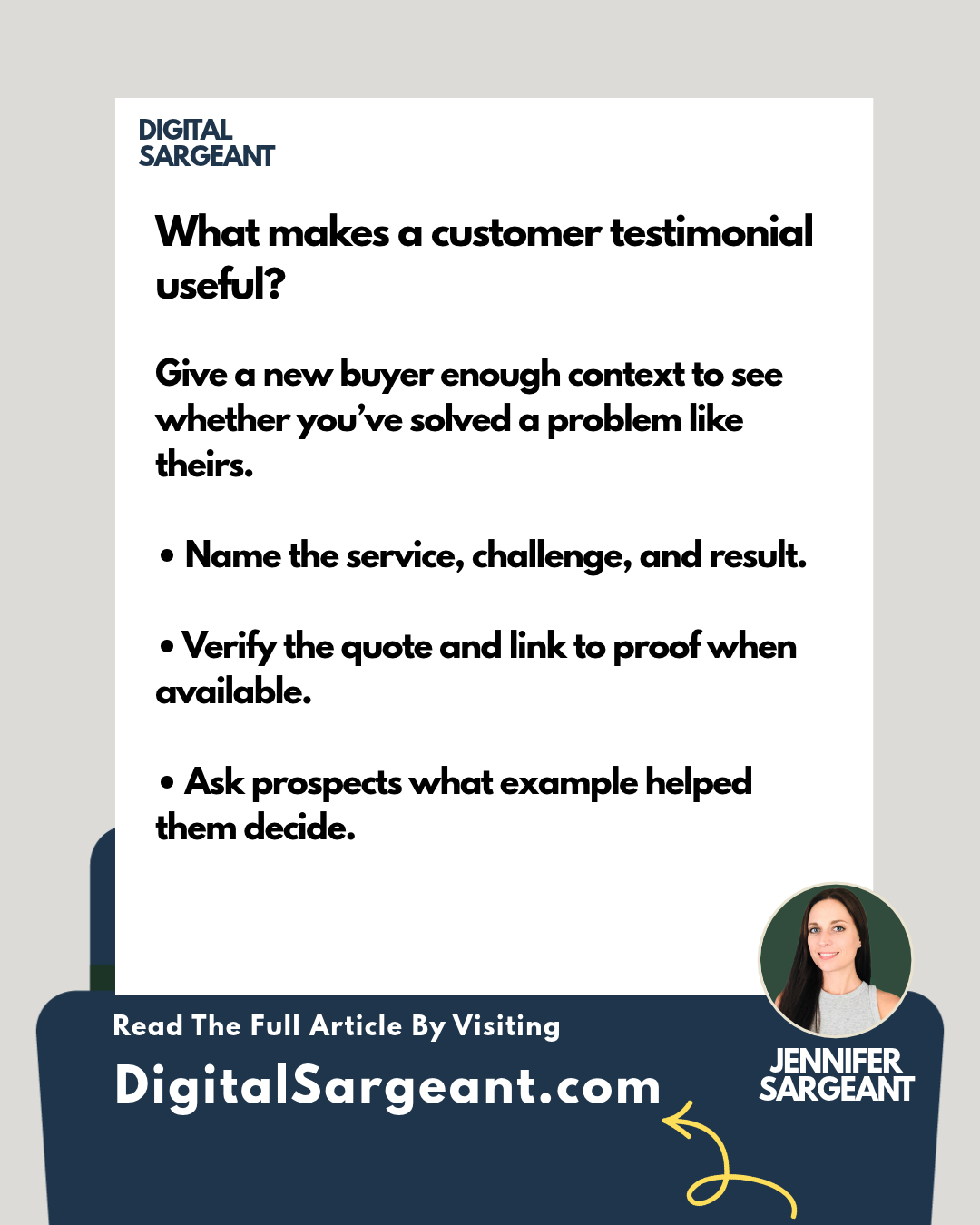
The strongest reason to publish a testimonial is to help a buyer decide whether you’ve solved a problem like theirs. Public testimonials can be discovered or cited, but there’s no clear evidence that posting them on social media improves AI rankings by itself. Put the best proof on the relevant service page or case study, with an approved quote that explains what the customer needed, what you did, and what changed.
In BrightLocal’s 2026 survey of 1,002 U.S. adults, 85% said positive reviews made them more likely to use a business, and 54% said they would visit its website after reading positive reviews. That is self-reported buyer behavior. It gives you a good reason to put relevant proof on the service page people visit next. BrightLocal’s 2026 Local Consumer Review Survey
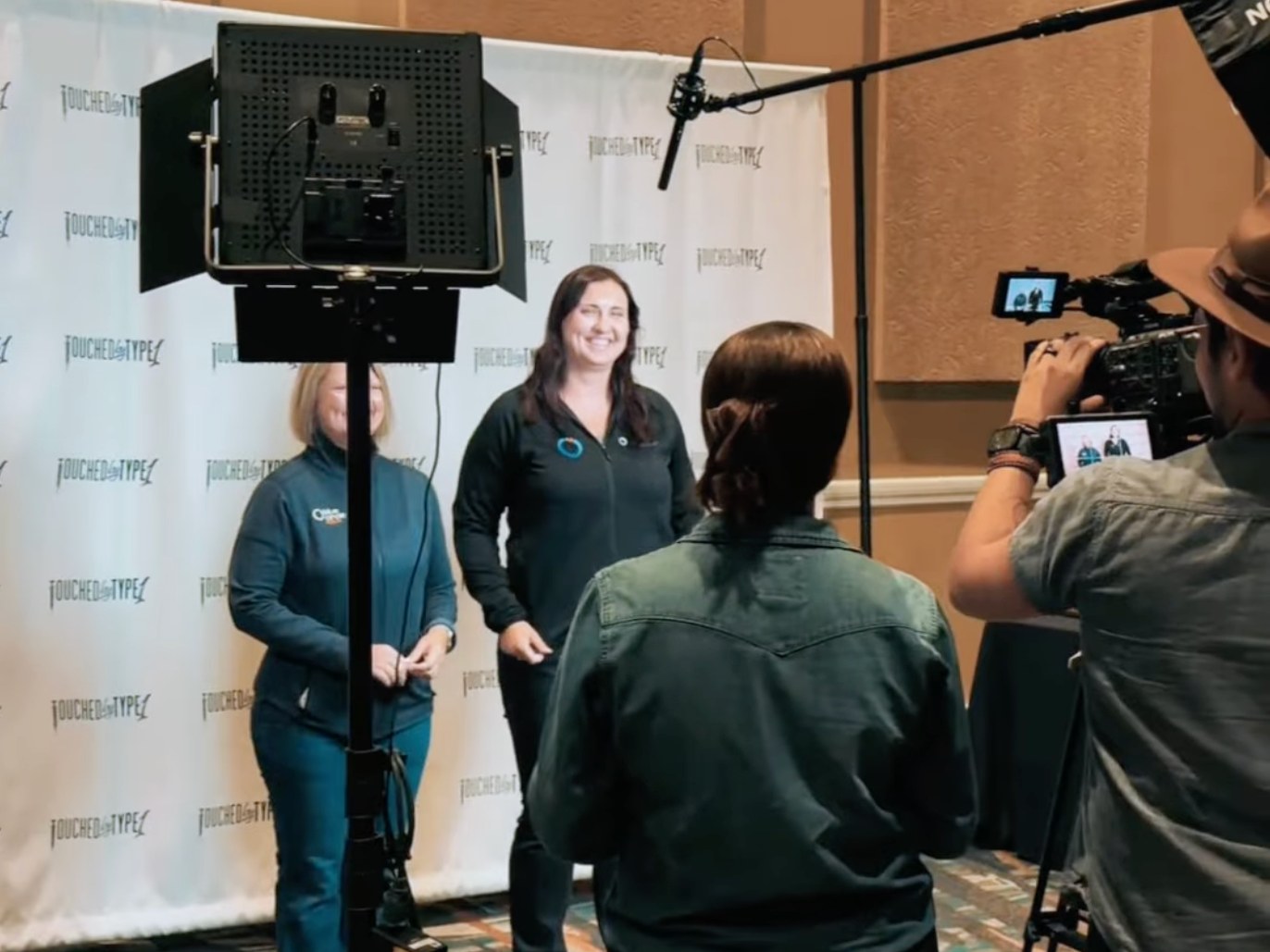
For example, imagine an event organizer says your team helped make a conference easier to promote. If the client approves, the caption can explain that the work involved a registration campaign, sponsor promotion, and weekly reporting. It gives the reader enough context to decide whether the work is relevant to their event.
Keep the evidence connected
Use the exact approved quote if you present it as a quote. Verify figures and timeframes against the original records. Add a link to the full case study where the reader can find more detail. The FTC’s endorsement guidance explains that testimonials should reflect honest experiences and that material relationships can require clear disclosure. FTC guidance on endorsements, reviews, and testimonials
A testimonial can influence a buyer who finds it. Whether it appears in an AI answer is something you can observe for particular questions. ChatGPT’s web-search citations let you see the source it links to in a given response. If the answer references a case study, a social post, or a business listing, record which one. OpenAI’s guide to ChatGPT search citations
Give the testimonial three useful places to work
1. Put the quote and a little context in a social post that answers a buyer’s question.
2. Build the verified project details into a case study, then link to it from the relevant service page.
3. Use the same proof in a proposal or follow-up email when that work is relevant to the prospect.
After publishing, check if Google finds the case study for your brand and service. Ask a few realistic buyer questions using web search in an AI tool and log what gets cited. If a discovery-call lead mentions the client story, capture that alongside the page and social metrics.
What a documented result gives the buyer
In our commercial flooring case study, Digital Sargeant reports a 332% increase in local visibility for a multi-location retailer during work that included hyperlocal SEO and targeted advertising. That’s a campaign result about visibility. Keep that description intact when adapting it to social. For example, a post could explain why the campaign needed a different local strategy by market and point a prospect to the case. Reserve the number for the specific result the original report supports.
When you have a client quote, ask which part of the work it describes and match it with a documented example. If you can only verify one location or one month, say so. Give the quote, result, and context a permanent home on the case-study page, then link to that page from the social content and relevant services.
Find out whether the example is helping people decide
Ask sales to record which proof a lead mentions and what service they’re considering. Compare clicks to the case study with qualified inquiries that reference it. For AI search, record the exact citation URL if an answer links to the case study or post. If a metric travels but the explanation is missing, add the context to the public material you control. If prospects never mention a generic testimonial, try one specific to their decision, such as what it took to coordinate work across locations.
Have strong reviews but few places where buyers can see what you actually did? Bring one testimonial and the service it supports to a free 20-minute call. I’ll show you how I’d give it more context across your site and social content.
Related articles: What Should Local Businesses Post on Social Media for AI Search? · How to Audit Your Local Business for AI Search Visibility